





Being a student isn’t just about learning — it’s also about managing costs, time, and expectations. That’s where free educational resources can make a real difference!
By free educational resources, we’re talking about the online tools, platforms, and materials that help students learn without paying tuition. From full courses to study apps, they give you flexible, affordable ways to stay on track.
For students trying to save money, explore new subjects, or move through school more efficiently, these resources offer a big advantage. They make learning more flexible, more accessible, and often more personalized than traditional paths alone.
In this guide, we’re sharing the 13 best free educational resources in 2026. And as the experts in saving on tuition costs, we’ll also share clear recommendations on when and how to use each resource and how you can turn free learning into real academic progress.
What are free educational resources?
Free educational resources make learning more flexible and accessible. Students can use them to explore new subjects, reinforce classroom material, or prepare for exams using courses, textbooks, videos, and study tools.
These resources may include:
Online courses from universities
Digital textbooks and academic libraries
Educational videos and lectures
Study tools like flashcards and spaced repetition apps
Some are completely free, while others offer free versions with optional paid upgrades. When used strategically, free resources can significantly reduce the cost of your education and help you keep up with your coursework.
The 13 Best Free Educational Resources
Below are some of our favorite free learning platforms that our students use every day. Each one serves a different purpose from subject-specific resources, to research tools, to study tools. Which one you use will depend on your goals (more on that below!)
1. Khan Academy (Learning Platform)
Best for: Foundational subjects
What it offers: Khan Academy provides structured lessons, practice exercises, and guided learning paths across subjects like math, science, and economics. Its content is designed to build skills step by step, making it especially useful for beginners or students reviewing core concepts. It also includes progress tracking to help learners stay on track.
Pros: Beginner-friendly, structured
Cons: No college credit
Free or limited: Fully free
2. MIT OpenCourseWare (Learning Platform)
Best for: Advanced learners
What it offers: MIT OpenCourseWare shares full course materials from actual MIT classes, including lecture notes, exams, and assignments. It allows students to learn at a high academic level without enrolling in a formal program. This makes it ideal for self-motivated learners seeking depth.
Pros: Deep academic content
Cons: No interaction or credit
Free or limited: Fully free
3. OpenStax (Content Resource)
Best for: Free textbooks
What it offers: OpenStax provides peer-reviewed, openly licensed textbooks used in many college courses. Subjects include biology, psychology, math, and more, making it a strong alternative to expensive textbooks. The content is regularly updated to maintain academic accuracy.
Pros: Widely used, credible
Cons: Limited subjects
Free or limited: Fully free
4. Project Gutenberg (Content Resource)
Best for: Literature and reading
What it offers: Project Gutenberg offers access to tens of thousands of free eBooks, including classic literature and historical texts. It’s a valuable resource for reading assignments, research, or general learning. Most content is available in various formats for easy access.
Pros: Huge library
Cons: Mostly older texts
Free or limited: Fully free
5. YouTube (Curated Channels) (Content Resource)
Best for: Visual learning
What it offers: YouTube hosts thousands of educational channels covering topics like science, history, and test prep. Students can find lectures, tutorials, and explainer videos that make complex topics easier to understand. The key is using curated, high-quality channels for consistent learning.
Pros: Engaging, flexible
Cons: Quality varies
Free or limited: Fully free
6. Quizlet (Study Tool)
Best for: Exam prep and memorization
What it offers: Quizlet allows students to create and study flashcards, practice quizzes, and interactive learning sets. It includes multiple study modes designed to reinforce memory and improve recall. Many pre-made study sets are also available for common subjects and exams.
Pros: Easy and effective
Cons: Some features paid
Free or limited: Free tier
7. Anki (Study Tool)
Best for: Long-term retention
What it offers: Anki uses spaced repetition to help students retain information more effectively over time. Users can create custom flashcards or download shared decks for specific subjects. It’s especially popular for subjects that require heavy memorization, like languages or science.
Pros: Extremely effective
Cons: Learning curve
Free or limited: Mostly free
8. Notion (Study Tool / Organization)
Best for: Organization and note-taking
What it offers: Notion is an all-in-one workspace where students can organize notes, track assignments, and manage study schedules. It combines documents, databases, and task management in one platform. This makes it useful for staying organized across multiple classes.
Pros: Highly customizable
Cons: Can feel complex
Free or limited: Free tier
9. Google Scholar (Research Tool)
Best for: Academic research
What it offers: Google Scholar helps students find scholarly articles, research papers, and academic sources across disciplines. It also provides citation tools and links to full-text versions when available. This makes it a key resource for writing papers and conducting research.
Pros: Reliable academic sources
Cons: Some paywalled content
Free or limited: Free
10. Zotero (Research Tool)
Best for: Citation management
What it offers: Zotero helps students collect, organize, and cite research sources efficiently. It can automatically save references from websites and generate citations in multiple formats. This simplifies the research and writing process significantly.
Pros: Saves time on research
Cons: Setup required
Free or limited: Free
11. Grammarly (Study + Writing Tool)
Best for: Improving writing
What it offers: Grammarly provides real-time suggestions for grammar, clarity, and tone while writing. It helps students improve essays, emails, and assignments with minimal effort. The free version covers essential corrections, while advanced features are optional.
Pros: Easy to use
Cons: Advanced features paid
Free or limited: Free version
12. JSTOR Open Content (Research Tool)
Best for: Accessing scholarly articles and academic research
What it offers: JSTOR Open Content provides free access to a curated selection of academic journal articles, books, and primary sources across disciplines like history, literature, and social sciences. While JSTOR is traditionally a paid database, its open content library allows students to explore high-quality research without a subscription. It’s especially useful for writing papers and supporting academic arguments with credible sources.
Pros: Trusted academic content, strong for research and writing
Cons: Limited compared to full JSTOR access
Free or limited: Free (open content only)
13. LibreTexts (Content + Textbook Resource)
Best for: Free, in-depth academic textbooks
What it offers: LibreTexts is an open educational resource platform that provides free textbooks and learning materials across subjects like chemistry, biology, engineering, and social sciences. The content is collaboratively created and openly licensed, allowing students to access, use, and even adapt materials. It’s widely used in higher education as an alternative to expensive textbooks.
Pros: Comprehensive, college-level content, fully free
Cons: Less structured than a full course
Free or limited: Fully free
Types of Free Educational Resources
Free educational resources serve different purposes depending on what you need as a student. Some are built for learning new material, while others help you study, stay organized, or complete research. Understanding these differences makes it easier to build a system that actually supports your learning.
Best for textbooks and content
OpenStax and Project Gutenberg offer reliable, free academic materials.
Best for studying and productivity
Quizlet, Anki, and Notion help you retain information and stay organized.
Best for research and writing
Google Scholar and Zotero are essential for finding and managing academic sources. These tools are especially important because reliable research platforms help ensure accuracy!
Best for college credit
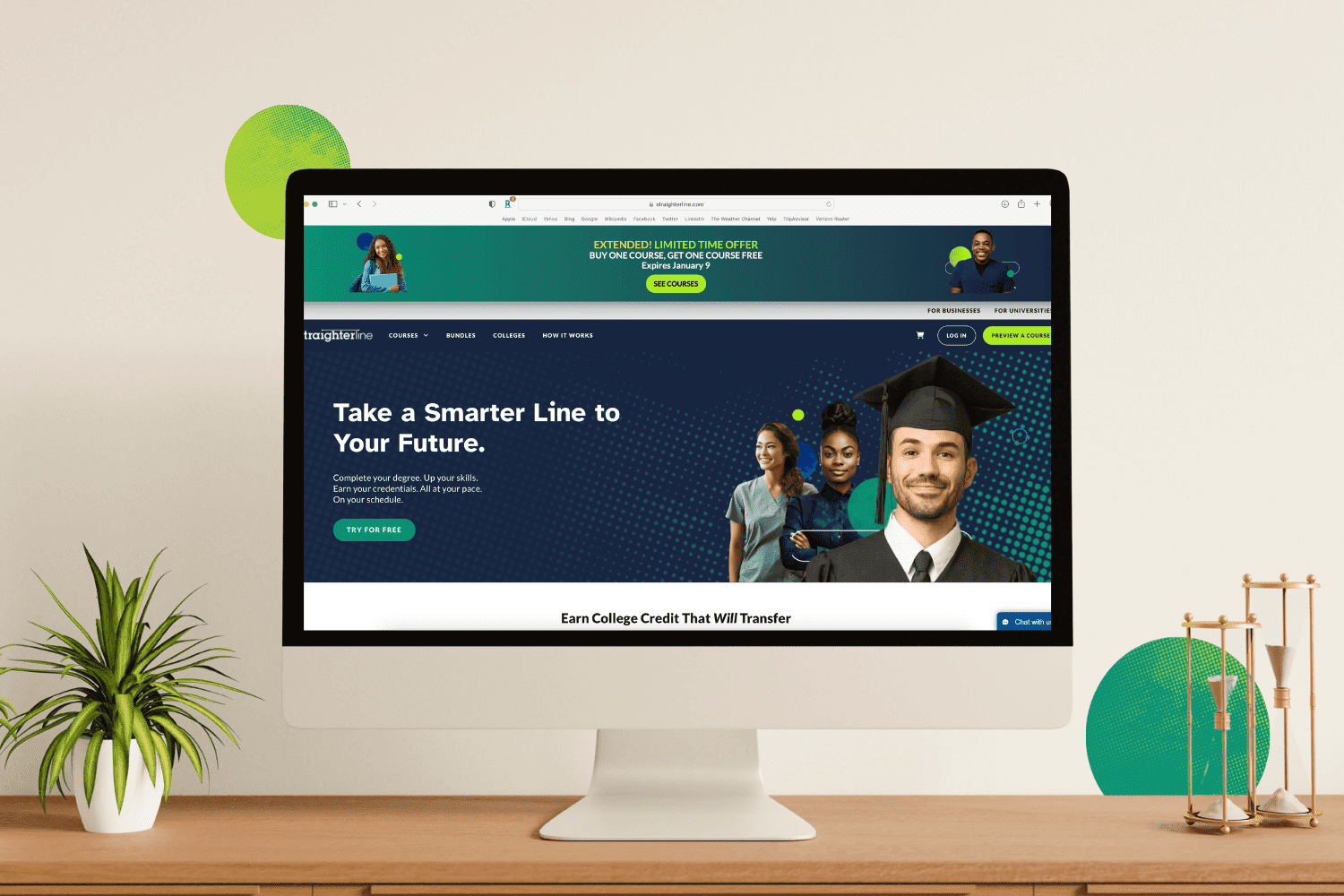
And if you’re looking for affordable college credit, StraighterLine offers 80+ affordable courses that are transferable to real college credit. While not completely free, our courses start at just $79. Explore our course library.

Which free resource is right for you?
The right resource depends on what you’re trying to accomplish.
If you want to learn new topics → Khan Academy or YouTube
If you want structured courses → Coursera or edX
If you want to study effectively → Quizlet or Anki
If you want to write or research better → Google Scholar or Zotero
The best strategy is usually a combination of tools rather than just one tool.
Are free educational resources worth it?
Free educational resources are worth it for many students, but they’re not a complete solution on their own. They offer flexibility and cost savings, but often lack structure and formal outcomes. Knowing what they can and can’t do is key to using them effectively.
Pros:
Cost savings
Flexible learning
Wide access to content
Cons:
Less accountability
Lower completion rates
Limited accreditation
That’s why many students use free tools to build knowledge first, then transition to structured options like StraighterLine when they’re ready to earn college credit.
Free vs paid learning: when to upgrade
Free learning is a great starting point, but it’s not always enough on its own. As your goals become more specific (earning college credit, completing a degree, etc.), paid options can provide the structure and results that free resources often lack.
Free learning helps you:
Explore subjects
Build confidence
Learn at your own pace
Paid learning helps you:
Stay accountable
Earn credentials
Make measurable progress
StraighterLine fits in as a bridge between the two, allowing you to apply what you’ve learned and earn real college credit without the high cost of college tuition. Take a look at our course catalogue here.
How to combine free resources to save money on college
Looking for a way to make the most of free educational resources? The most effective approach is to create some structure in your schedule and combine different types of resources. For example, you might:
Learn concepts (Khan Academy, YouTube)
→ Reinforce with study tools (Quizlet, Anki)
→ Research and write effectively (Google Scholar, Zotero)
→ Earn college credit (StraighterLine)
This layered strategy can help you:
Learn faster
retain more
reduce overall college costs
Save Thousands on College Tuition with StraighterLine
Free educational resources are everywhere, and they have made self-paced learning more accessible than ever! The real advantage comes from using them strategically and knowing where the limits lie.
Start with free tools to build knowledge. Then, when you’re ready to turn that knowledge into real progress, structured options like StraighterLine can help you move forward with confidence, without the high cost of traditional college paths.
Ready to get started? Check out our courses to see how much you can save.
FAQs
What are free educational resources?
Free educational resources are tools and platforms that help you learn without paying tuition. These can include online courses, textbooks, study apps, videos, and research tools—all designed to support different parts of the learning process.
What are the best free educational resources for students?
Some of the best free educational resources include Khan Academy, OpenStax, Quizlet, and Google Scholar. The right choice depends on what you need—whether that’s learning new material, studying for exams, or completing research.
Can you earn college credit with free educational resources?
Most free educational resources don’t offer college credit on their own. However, they can help you prepare for credit-bearing options like CLEP exams or structured online courses through providers like StraighterLine.
Are free educational resources actually effective?
Yes, free educational resources can be very effective—especially when you use them consistently and with a clear goal. They’re great for building knowledge and practicing skills, but they usually work best when combined with more structured learning if you need formal outcomes.
What’s the best way to use free educational resources?
The best approach is to combine different types of resources based on your needs. For example, you might learn a concept through a video, practice it with a study tool, and then apply it in a course or for college credit.