





College affordability isn’t only about finding the school that costs the least. It’s about investing in every credit with intention about where it comes from, how you earn it, and what you pay for it. In this guide, we're exploring the world of affordable college credit — including the real cost of a college credit, the best way to get affordable college credit, and how to make the most of your college education. Let's get started.

The Real Cost of One College Credit (And Why It Matters)
Most bachelor’s degrees are made up of 120 credits. While one credit might not seem like much, it’s the price per credit that ultimately determines the total cost of your education!
Tuition can be expensive. At a public four-year college, the average cost per credit hour is around $406 (for in-state students), placing a single three-credit course at roughly $1,200 in tuition and fees alone. Costs at private institutions can be even higher — $40,000 is the average annual tuition at private four-year colleges, and that figure reflects only the listed tuition.
Every credit you earn also carries additional, often-overlooked expenses, including:
Fees: tech fees, “student activity” fees, lab fees, random “service” fees tacked on per term.
Books and materials: the average student pays around $1,212 per year on books and supplies alone.
Housing and food: on‑campus or off, rent and groceries don’t pause because you’re in class.
Transportation: gas, parking, public transit — none of it is free.
Lost work hours: time in class is time you’re not earning, especially if you’re full‑time.
Two people may both pay the same for a course, but when costs like dorm living, a meal plan, campus fees, and lost work time are factored in, the total costs can vary dramatically from one student to the next.
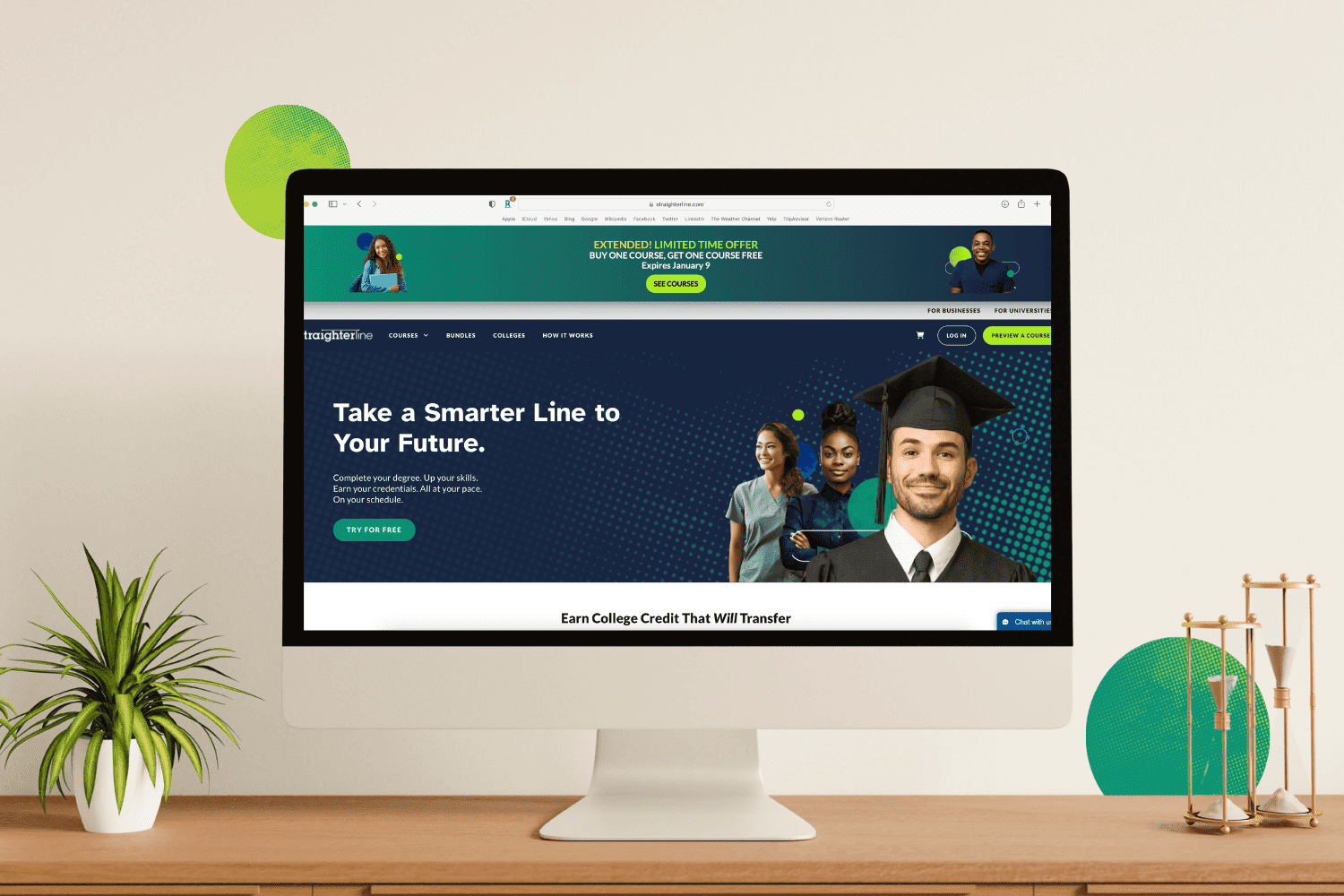
Something that’s often misunderstood is that less expensive credits are lower quality. That’s far from the truth! Approved online prerequisites and general education courses, like the those offered by StraighterLine, can help you save thousands on college tuition. That's because they save on overhead classroom costs — and you’re not paying for housing, transport or extra campus fees. Plus, resources like textbooks and course materials are often included at no extra cost.
In other words, a lower price simply means lower overhead for the provider, not lower standards for students. Keep these strategies in mind when considering whether to use an online platform to earn affordable college credit:
Plan your path instead of just “signing up.”
Compare options and read transfer policies.
Mix and match: community college, online providers, credit‑by‑exam, and your eventual four‑year school can all be combined on the path to earning your degree for less.
If you’re willing to do that work up front, you can cut thousands (sometimes tens of thousands) off your degree, finish faster, and keep more flexibility in your life while you study.
It’s not just about saving money. It’s about assembling the most cost‑effective, credible set of credits that gets you to the finish line.
How to Maximize Savings on College Credit Without Sacrificing Quality
1. Starting Smart with Online Course Providers and Community College
If you want a low-risk way to save money on college credits, this is it: get your general education and prerequisites at lower‑cost providers, like StraighterLine. Then, transfer the credits you earn toward your degree at your school.
For example, the average cost per credit with StraighterLine is just $30 per credit compared to $400 per credit hour for in-state students at the average public four-year university.
Think of the below as your “Starting Smart” checklist:
Step 1: Target Gen Eds and PreReqs first
Your first 30–60 credits in English, math, science, intro social sciences tend to be the most widely accepted for transfer. They’re also the easiest to get for less!
General Education requirements include classes like English Composition, College Algebra, basic lab science, intro history or social science. Prerequisites are the courses that you have to take before higher level courses (e.g. college algebra before calculus). You can take a look at some of the most common general ed courses here.
These types of classes are offered at almost every institution, don’t typically require niche faculty or custom labs at your future university and have well‑defined learning outcomes so transfer decisions are easier.
Step 2: Use reputable online course providers
You don’t have to be in a classroom at all to earn transferable college credits. Online options, especially for prerequisites, are built for savings and flexibility.
Online courses are often significantly cheaper due to lower tuition, fewer fees, and the absence of commuting or housing costs. Online platforms like StraighterLine, use membership or subscription models that allow students to pay a flat monthly fee to access multiple courses.
Step 3: Add community college courses
Community colleges are also a great cost‑saving resource. They offer a budget‑friendly entry point to higher education, with average annual tuition of about $3,860 for in‑district students. Compare that to a public or private four‑year school and you’re getting the same intro English or math for a fraction of the cost.
Many community colleges now offer online versions of these courses too, so you can live at home, keep working, avoid commuting costs, and take classes on your own schedule.
Step 4: Make transfer agreements and accreditation non‑negotiable
Make quality and credibility a top priority to ensure you still get a great education while saving money. To make sure any affordable college credit you earn actually counts toward your degree, you can take the following measures:
Choose accredited or ACE-recommended providers. Choosing accredited programs ensures the legitimacy and transferability of credits, which can reduce overall costs.
Look for online providers that publish partner school lists or “guaranteed transfer” information. You can find a list of partners colleges and universities or directly accept StraighterLine credit here.
Check whether your community college has articulation agreements or transfer pathways with specific four‑year universities.
Ask your target school directly how they treat transfer credits from your chosen source.
Transfer credits from other institutions can shorten degree timelines and save money, but only if they transfer.
Step 5: Set aside the concern that alternative credit is less serious.
Starting at a community college or mixing in online gen eds doesn’t make you look “less serious” at all. From an academic standpoint, you’re completing the same requirements, often with more self‑directed learning and time management (which employers respect). You’re also showing you can plan and manage your own path.
For example, you might complete English Composition, College Algebra, and Anatomy & Physiology online or at community college while working. By the time you transfer into your four‑year school, you’ll already have 30–60 credits so you can spend the tuition dollars you saved on advanced major-specific courses.
2. Test Out of What You Already Know
You might have existing knowledge that you haven’t converted to credit yet. Credit‑by‑exam options like CLEP and DSST let you prove what you know on a standardized test for college credit. No semester‑long course, no weekly discussion posts — just passing the exam and earning the credits.
Who can get the most out of CLEP and DSST?
Adult learners with work experience: If you’ve been using Excel, managing projects, doing bookkeeping, or working in IT, you may already know the content of intro business, computer literacy, or management courses.
Language people: Strong in Spanish, French, or another language? Language CLEP exams can convert your skills directly into credits.
Math‑confident students: If you’re already comfortable with algebra, statistics, or pre‑calculus, you may be able to leapfrog the lower‑level classes.
Students fresh out of strong high school or AP courses: Even if your AP credits didn’t transfer, the content overlap might be enough to help you pass a CLEP exam.
Before pursuing credit-by-exam, you’ll just want to confirm your school’s policy. Every college has its own policies for which exams they accept (CLEP, DSST, others), minimum scores required, how many credits you can earn this way, and which requirements those credits actually fulfill (elective vs. specific course).
You might find this information through:
The college website (search “CLEP” or “credit by examination”)
The registrar’s office
An academic advisor
If you’re still in high school or just starting out, don’t forget: taking Advanced Placement (AP) credits in high school could also cut down on your overall cost of college. With Advanced Placement, if you score a 3 or higher on certain AP tests, many schools give you direct credit.
3. Prioritize Online, Self‑Paced, and Competency‑Based Options
Traditional college still assumes a lot of classroom time. You need to spend the full semester in a class, regardless of how quickly you actually master the material. Competency‑based and self‑paced options flip that: you’re paying for progress, not just how long you spend.
This might look like:
Self‑paced courses like those offered by Straighterline. You move through the material as fast or steady as you like. If you already know half of it, you don’t have to crawl along for 16 weeks.
Competency‑based education: You earn credit by proving you’ve mastered specific skills or competencies through projects, exams, or assessments instead of logging hours in a classroom.
Competency‑based education programs are cost‑effective because you can progress at your own pace. If you’re motivated, that can turn into real savings by finishing requirements faster, paying less in fees, and getting to your higher level courses faster.
You also save money by having more choice over where you live and how much time you spend on coursework.
StraighterLine focuses on online, self‑paced, and competency-based learning by offering students:
A flat monthly membership that lets you take multiple courses at once, while providing all the resources and support you need to succeed.
Self‑paced general education courses you can complete in weeks rather than months.
ACE-recommended credit that has been accepted by more than 3,000 colleges and universities.
To make sure that your coursework is high quality and will transfer towards your degree program, focus on programs that offer:
Regional Accreditation or ACE Recommendation: This is your baseline. Courses from regionally accredited institutions — or those recommended by the American Council on Education (ACE) — are far more likely to transfer and be recognized by other colleges.
Clear Learning Outcomes: Look for detailed course descriptions and specific learning outcomes. Make sure they align with what your target school teaches to maximize transferability.
Proven Transfer History: Check whether the provider’s credits have actually been accepted by real colleges, especially those you plan to attend. Testimonials, transfer guides, or published agreements can help.
Support for Lab Requirements: For science courses, verify how labs are handled. Some programs offer virtual labs, while others send at-home kits. Know your comfort level and your program’s requirements before enrolling.
One important note is that self‑paced and competency‑based formats are not well-suited for all learning styles. If you’re good at managing your own schedule or if you’re willing to build those habits you can move through material at the right speed for you, not for the calendar. You’re no longer paying for time and instead paying to check off requirements as efficiently as possible.
4. Take Advantages of Any Discounts You Can Find
Once you’ve optimized where your credits come from, the next move is to optimize how you pay for them.
This is where most people leave money on the table. A few great ways to reduce the cost of your college tuition include:
Filling out the FAFSA, even if you’re part‑time or online
FAFSA isn’t just for full time students. It’s the key to getting:
Federal grants (which you don’t repay).
Federal loans (which are usually more favorable and more flexible than private loans).
Work‑study opportunities.
Sometimes, institutional aid that requires a FAFSA on file.
Tip: Early application for federal financial aid via FAFSA increases your chance of qualifying for grants, scholarships, and work‑study. Federal loans should be prioritized due to their borrower protections while private student loans can help with the rest.
Even if you’re doing a mostly online or transfer‑heavy path, you still want those doors open.
Step 2: Seek out scholarships and grants
You’ve heard this before, but it’s worth repeating because the impact is huge:
Scholarships and grants are there to make college more affordable. Seek out ones that you’re eligible for and apply!
Over $7 billion in Pell Grants helped low‑income students in 2023.
Scholarships come from schools, companies, nonprofits, and professional associations.
Tip: Start researching scholarships early, because gathering the required documents and information to apply takes time, and early deadlines are common for large awards.
Don’t just aim for the big national awards. Smaller, niche scholarships add up quickly especially when you’re already lowering your per‑credit cost.
Step 3: Take advantage of employer and military benefits
If you’re working, check your HR portal or benefits handbook.
Many companies offer tuition reimbursement or assistance as an employee benefit, making education more affordable for working professionals.
Some cover specific programs; others give you a dollar amount per year to use toward accredited courses.
The military and veterans often qualify for significant education benefits and tuition discounts.
Combine that with more affordable sources of credit (community college, online gen eds, self‑paced programs), and suddenly your out‑of‑pocket drops dramatically.
Step 4: Don’t ignore the “small” wins
The non‑tuition line items add up fast. Being thoughtful about all your college expenses will add up over time, including,:
Textbooks and materials: Use rentals, used copies, library reserves, or digital textbooks whenever possible.
Housing and living costs: Housing, food, and lifestyle choices can add thousands to your education costs annually. Consider having a roommate, living at home, or ways you might save on your commute for ongoing college savings.
Food: Prepare meals at home or opt-out of meal plans if possible
Fees and payments: Look for application fee waivers and ask about them if cost is a barrier. Many colleges also offer payment plans so you can spread tuition rather than leaning harder on loans.
Each of these might feel minor. Together, they change how much every credit actually costs you in real life.
Step 5: Treat every credit like an investment, not a default
This is the mindset shift that ties everything together. For every single credit you earn, ask:
Where can I earn this without sacrificing accreditation and transferability?
Could I test out of this instead of taking the full course?
Is there a self‑paced or competency‑based option that would let me move faster?
Am I stacking all the aid, discounts, and benefits I’m eligible for?
Does this credit get me measurably closer to my end goal or is it just “filler”?
College is expensive, but you can cut costs and enjoy your experience with the right strategies.
You have more levers than you’ve probably been told: community college, online providers, credit‑by‑exam, competency‑based programs, employer benefits, scholarships, OERs, careful housing and food choices. Combining multiple strategies scholarships, community college, online programs, work options, and budgeting can make earning a degree feasible and affordable.
Ready to start earning affordable college credit?
Start your college journey the smart way. Focus on courses with regional accreditation or an ACE recommendation, clear learning outcomes, proven transfer history, and lab support when needed. Instead of chasing “the perfect school,” map your own affordable path: list your degree goals, identify required gen eds and major courses, and see which you can take online, at community college, or via credit-by-exam.
StraighterLine makes this easy. With self-paced, transferable courses, you can earn college credit more affordably. Combine this with financial aid, employer benefits, and other cost-saving moves, and you’re not just enrolling — you’re designing a degree that fits your goals and your budget.
Get in touch with a StraighterLine Enrollment Specialist today and start building a flexible, cost-effective path to your degree.