





College credit has been measured in hours for a long time. Hours in classrooms, hours logged online, hours spent enrolled. That system shaped everything from tuition to transcripts to what a “degree” even means. But that's starting to change.
As work changes, technology accelerates, and more learners move in and out of education throughout their lives, the idea that time equals learning is losing its grip. What’s replacing it is something more practical, more transparent, and far more aligned with the real world: proof of skills.
The future of college credits isn’t about where learning happens or how long it takes. It’s about what someone can actually do when it’s over.
How is the Credit Hour Changing?
Measuring learning by how long someone sat in a room (or stayed logged into Zoom) was never a great system.
Two people can complete the same 3-credit course. One barely keeps up while other goes beyond the syllabus, applies the material at work, and builds real expertise. At the end, both earn the same credits and the same transcript line despite very different outcomes.
That’s the core flaw of the credit hour. It measures time, not competence.
The future of college credits is moving away from seat time and toward outcomes: what someone can actually demonstrate. Instead of asking, “Did this person pass English 101?” the more meaningful question becomes, “Can they research, write, and communicate clearly in different contexts?”
Employers already think this way. They care less about how learning happened and more about whether someone can:
Write clearly and professionally
Analyze information instead of just collecting it
Collaborate without projects falling apart
That shift is driving skills-based hiring, portfolio reviews, and growing interest in certifications and verified credentials.
The tension is clear:
Old model: Accumulate credit hours, complete required courses, earn a degree.
Emerging model: Prove specific, verifiable competencies, regardless of where or how they were learned.
Online learning and digital credentials are accelerating this change. Online education is expected to rival campus-based education in the coming years, and digital environments are far better equipped to track performance, mastery, and progress — not just attendance.
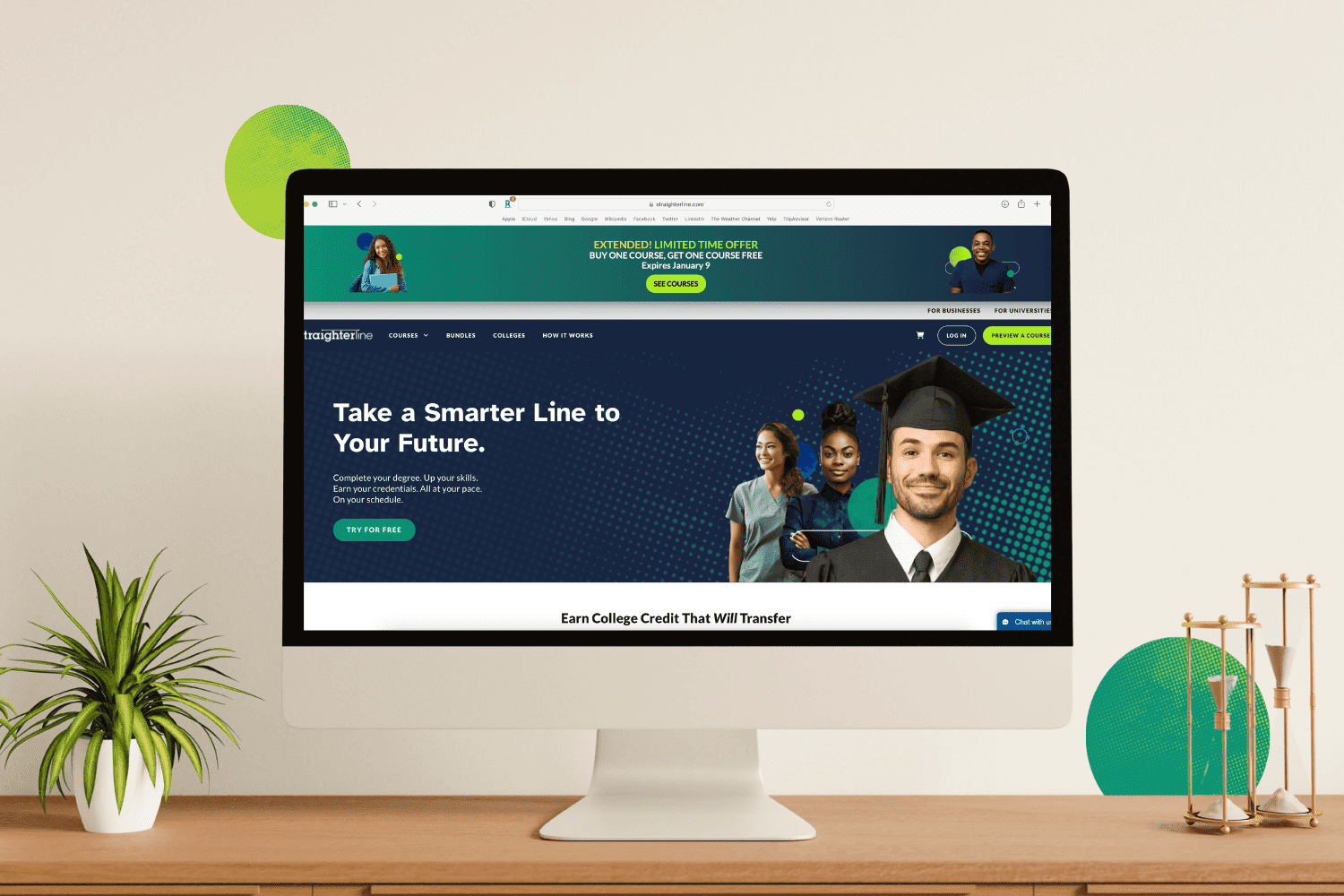
Online courses, like the ones we offer at StraighterLine, reflect this shift by focusing on mastery of college-level material rather than time spent in a classroom, allowing learners to move forward as soon as they demonstrate competency.
The credit hour isn’t disappearing overnight. But its monopoly on what “counts” as college-level learning is fading fast.

What is competency-based education and what's actually changing?
So what does “competency-based” actually mean in practice? It's credit earned by demonstrating skills or knowledge, not just by completing a course.
Instead of “Statistics 101 completed,” a competency-based model might document the ability to clean a dataset, select appropriate visualizations, run basic analyses, and explain results to a non-expert.
It's the same topic with far more clarity.
Think of it as unbundling the degree.
A traditional 3-credit course is a bundle: pass the class, get the credits, move on. But it’s hard to tell which specific skills were actually mastered.
In a competency-based system, that same course becomes more like a skills playlist:
Writing: research, structure, clarity, revision
Data literacy: basic statistics, chart interpretation, spotting flawed data
Teamwork: communication, collaboration, conflict resolution
Each skill becomes a distinct, trackable competency with clear standards. Instead of a single letter grade, there’s evidence that specific abilities meet agreed-upon criteria.
These competencies are designed to be:
Measurable: Clear definitions of proficiency
Portable: Usable across programs and institutions
Stackable: Smaller units that build into certificates and degrees
That’s where many college credit predictions are pointing: modular education built from flexible building blocks rather than one long, rigid path.
StraighterLine takes this unbundled approach by offering individual, self-paced courses that align to specific learning outcomes and are designed to transfer into degree programs rather than stand alone.
Education starts to look less like a fragile bundle and more like a durable record of skills collected across courses, jobs, bootcamps, and online programs. Degrees still matter — but the components inside them start carrying more weight.
How are online education trends pushing the shift?
This transition isn’t happening in isolation. Online education trends are doing much of the work.
Digital learning makes it easier to document what someone can do, not just what they completed.
Online education already shows strong momentum:
Online learning is expected to rival campus-based education more closely in the coming years
The global e-learning market is projected to reach $400 billion by 2026
This growth isn’t just about convenience. It’s about data. Every quiz attempt, project submission, simulation, and reflection creates evidence of learning. With AI and analytics, institutions can track progress, mastery, and skill development in ways transcripts never could.
Key drivers include:
AI and learning analytics
AI in education is projected to grow rapidly in the coming years, with market forecasts showing a compound annual growth rate of nearly 40% through 2028 as institutions and EdTech companies accelerate adoption of intelligent learning tools.
In practice, that enables:
Adaptive learning paths based on readiness
Real-time feedback on writing and problem-solving
Data-informed validation of whether competencies are actually being met
Portfolios, micro-credentials, and badges
Instead of a single transcript entry, learners increasingly build:
Digital portfolios of real work
Micro-credentials for targeted skills
Stackable credentials that apply toward degrees
Many universities now design short credentials that plug directly into larger programs, allowing learning to count now and later.
Technology that supports modular learning
There’s also a financial incentive. Online course creation is significantly cheaper than in-person instruction, and online credits often cost less per unit — making modular, skills-based education more attractive for institutions and learners alike.
This is where course-level providers like StraighterLine play a key role, giving learners affordable, online credits that can stack directly into partner college degree pathways.
Why This Shift Matters for Working Adults and Career-Switchers
The traditional credit model was built around full-time, campus-based students. Anyone outside of that has had to adapt to get their degree.
Competency-based, online-friendly systems change that by allowing:
Flexible learning schedules
Recognition of prior work, military service, or informal learning
Short credentials that move learners meaningfully toward degrees
This shift acknowledges reality — and designs education around it. StraighterLine is often used by working adults precisely for this reason: courses are self-paced, lower-cost, and designed to fit around full-time jobs while still earning transferable college credit.
The Future of Competency-Based Learning for Working Adults and Career-Switchers
The future of competency-based learning isn't so far off. Some formats that are already popular and growing in relevance are:
Online university courses
Industry bootcamps
Micro-credentials in areas like project management and communication
On-the-job leadership experience
In the old system, much of that learning wouldn’t count, but in the emerging system:
Micro-credentials convert to academic credit
Bootcamp skills map to degree requirements
Work experience is assessed through prior learning evaluation
Credits transfer more smoothly across institutions
The result is education that’s faster, less expensive, and more relevant without sacrificing rigor.
For many learners, this future already looks like taking general education or prerequisite courses through providers such as StraighterLine, then transferring those credits into a degree-granting institution. Take a look at our partner schools here.
The Costs of Shifting from Course-Based to Competency-Based Learning Online
This shift to competency-based learning isn’t risk-free. Some major risks of this model include:
Quality: Without standards, credentials lose meaning
Equity: Access gaps could widen without inclusive design
Confusion: Too many frameworks could overwhelm learners and employers
It will take trust, coordination, and shared standards will determine whether this future works. So how do you navigate the shift? No policy expertise required. All it will take is smarter questions:
What skills are demonstrated, and how?
Do credentials stack into degrees?
How is prior learning evaluated?
How do credits transfer inside and outside the institution?
Programs that emphasize portfolios, competencies, and stackable pathways signal readiness for what’s next.
The Bottom Line:
College credits are no longer just hours accumulated. They’re becoming evidence of capability — visible, verifiable, and valuable.
Online and hybrid learning aren’t temporary alternatives. They’re permanent forces reshaping how learning is measured and recognized.
The future of college credits belongs to those who treat them not as boxes to check, but as proof of what they can actually do. Platforms like StraighterLine make that future more accessible by offering affordable, self-paced online courses designed to transfer into degree programs. For learners looking to build real skills while earning college credit, it’s a practical place to start.
Get in touch with a StraighterLine enrollment specialist to start your learning journey now!
FAQs
What are online college credits?
Online college credits are academic credits earned through online courses or programs that meet institutional and accreditation standards. They are increasingly designed to be transferable, skills-based, and equivalent to on-campus credits.
How are online college credits changing in the future?
Online college credits are shifting away from seat-time requirements toward competency-based and outcomes-focused models. This means credit is awarded for demonstrated skills rather than hours spent in a course.
Will online college credits transfer more easily between schools?
Yes, transferability is expected to improve as institutions adopt shared competency frameworks, stackable credentials, and system-wide articulation agreements. Policy changes and employer pressure are also pushing colleges to recognize alternative and online learning more consistently.
What role do micro-credentials play in online college credits?
Micro-credentials validate specific skills and can often be stacked or converted into college credit. Many universities now allow these short credentials to apply toward certificates or full degree programs.
Are online college credits valued by employers?
Employers increasingly value online college credits when they are tied to verifiable skills, portfolios, or competencies. Skills-based hiring practices place more emphasis on what candidates can demonstrate than on where or how the credits were earned.