





A strategic guide for nursing students navigating the 2025 federal loan changes
The landscape of nursing education financing just shifted dramatically. In November 2025, the U.S. Department of Education reclassified advanced nursing degrees — excluding programs like Nurse Practitioner (NP), Certified Registered Nurse Anesthetist (CRNA), and Doctor of Nursing Practice (DNP) from the "professional degree" category. This change caps federal student loans for graduate nursing programs at $20,500 annually (down from $50,000), creating a significant financial barrier for nurses seeking to advance their careers.
While this policy primarily affects graduate nursing education, it sends a clear message to every prospective nursing student: minimize debt early, or pay the price later.

Understanding the New Reality
Here's what hasn't changed: undergraduate nursing programs (BSN and ADN) are not affected by this reclassification. Basic nursing education still qualifies for standard federal student loan limits.
But here's what has changed: The path from RN to advanced practice nursing just became significantly more expensive and less accessible. With many CRNA programs costing $100,000-$150,000 and requiring full-time attendance (no working while enrolled), the new $20,500 annual cap creates an impossible math problem for most students.
The implication? Every dollar you borrow for your BSN is a dollar less you can borrow for graduate school — and a dollar more you'll need from private lenders at higher interest rates.
The Debt-Smart Nursing Strategy
The good news: You can still build a successful nursing career. You just need to be more strategic about how you finance it.
Phase 1: Minimize Undergraduate Costs (Where You Have Control)
Your undergraduate years are where you have the most flexibility to reduce costs. Here's how:
1. Start with Prerequisites at Lower Cost
Before you even apply to nursing school, you'll need prerequisites:
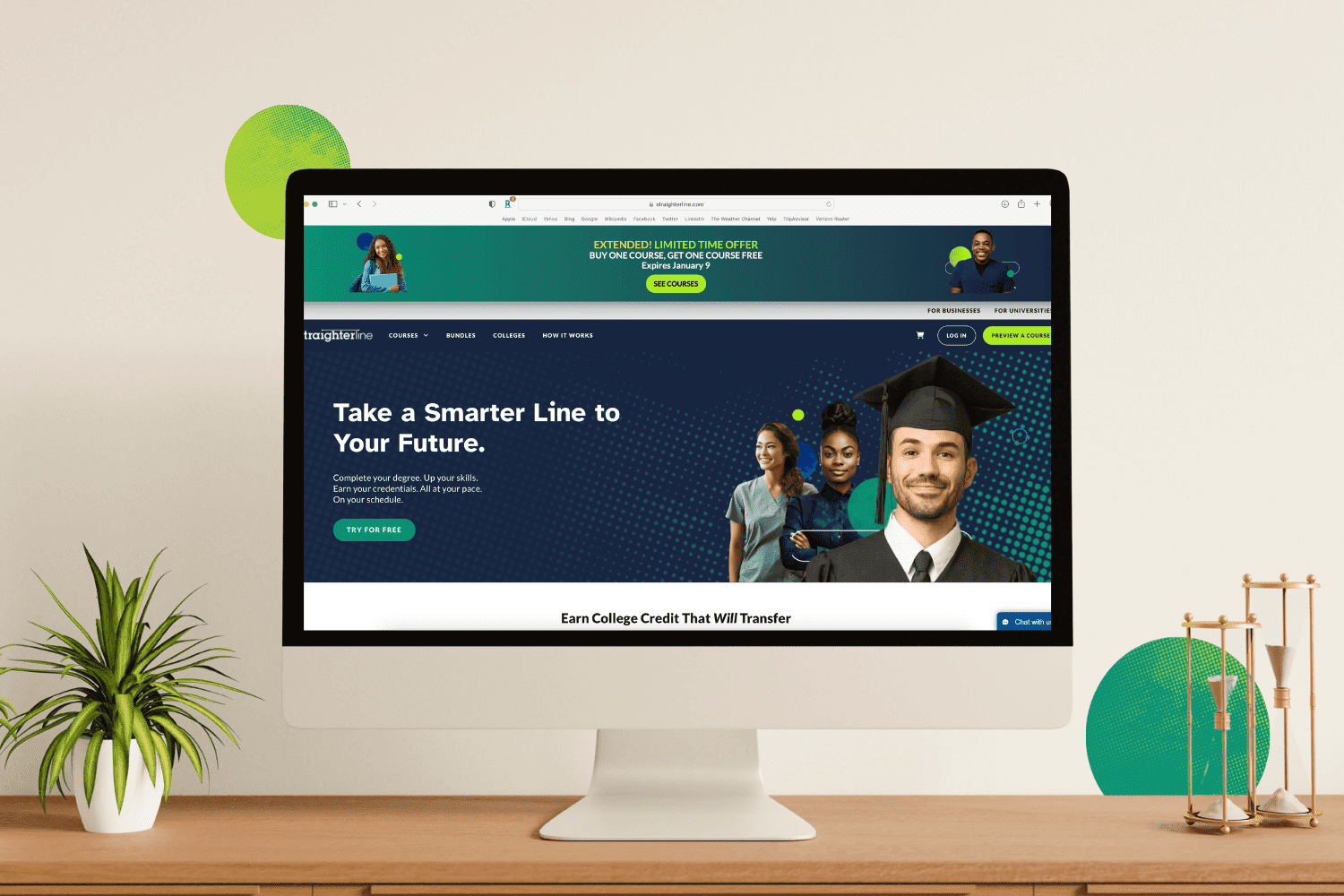
Traditional universities charge $300-$1,200+ per credit hour for these courses. Alternative pathways, including affordable online providers like StraighterLine, offer the same transferable credits for a fraction of the cost — often $79-$99 per month with unlimited courses.
Potential savings: $3,000-$8,000 before you even start your nursing program.
2. Consider the ADN-to-BSN Pathway
The traditional route: 4-year BSN program at a university ($60,000-$120,000)
The strategic route:
Associate Degree in Nursing (ADN) at community college ($8,000-$20,000)
Pass NCLEX, work as an RN while earning income
Complete RN-to-BSN online program while working ($10,000-$25,000)
Employer often provides tuition reimbursement
Potential savings: $30,000-$70,000 while gaining clinical experience and income.
3. Maximize Transfer Credits
If you're committed to a traditional BSN program, reduce costs by:
Completing general education requirements through lower-cost college course providers
Taking CLEP exams for college credit ($89 per exam vs. $1,500+ per course)
Attending community college for the first two years, then transferring
Front-loading healthcare prerequisites before entering competitive nursing programs
Many nursing students don't realize that 30-40% of their BSN credits are general education, not nursing-specific courses. These can often be completed elsewhere — through an online platform like StraighterLine, for example — for less.
Phase 2: Strategic Career Planning (Think Five Years Ahead)
With graduate nursing loans now capped, your undergraduate choices matter more than ever.
If you plan to pursue advanced practice nursing:
Graduate with minimal undergraduate debt — Every dollar saved now is a dollar available later (or one less dollar at 8-12% private loan interest)
Choose employers strategically — Many hospitals offer:
Tuition reimbursement for graduate degrees ($5,000-$15,000/year)
Loan repayment assistance programs
Partnerships with specific graduate nursing programs
Sign-on bonuses that can offset education costs
Build savings while working as an RN — If you graduate from your BSN with minimal debt and work 2-3 years before graduate school, you can:
Save $20,000-$40,000 for graduate school
Qualify for employer tuition benefits
Gain clinical experience that makes you a stronger applicant
Reduce reliance on loans entirely
Research graduate programs strategically — Not all NP or CRNA programs cost the same:
Public in-state programs: $40,000-$70,000
Private programs: $80,000-$150,000+
Program length varies: 2-3 years
Part-time vs. full-time options affect income potential
The Math That Matters
Let's compare two hypothetical nursing students:
Student A: Traditional Path
4-year BSN at private university: $100,000 debt
Works 2 years as RN
CRNA program (3 years): $120,000
Limited to $61,500 federal loans ($20,500 x 3)
Must borrow $58,500 privately at 9% interest
Total debt: $158,500 (plus higher interest on portion)
Student B: Strategic Path
Prerequisites via low-cost provider: $2,000
ADN at community college: $15,000
Works 3 years as RN, saves $30,000
RN-to-BSN online (employer pays half): $6,000
CRNA program with $30,000 cash: $90,000 total cost
Federal loans cover: $61,500
Only needs $28,500 additional (could use savings or small private loan)
Total debt: $67,500
Difference: $91,000 in total debt — or about $1,100/month in loan payments over 10 years.
What Straighterline Students Should Know
If you're exploring nursing as a career path, here's how to leverage affordable education strategically:
Complete prerequisites efficiently — Get Anatomy, Microbiology, Chemistry, and general education requirements done affordably before applying to competitive nursing programs
Research transfer policies — Identify nursing programs that accept alternative credit providers for non-nursing coursework
Plan your full pathway — Don't just think about getting your RN; think about your 10-year career trajectory
Join nursing communities — Reddit's r/nursing, r/StudentNurse, and specialty forums provide real-world insight into costs, programs, and career planning
Track policy changes — Nursing organizations (American Nurses Association, American Association of Nurse Practitioners) are actively lobbying to reverse this reclassification
The Bigger Picture
The 2025 loan policy changes represent a significant challenge for nursing education, but they also highlight a truth that's always been present: student debt is a long-term burden that limits your future choices.
Whether this policy gets reversed or not, the principle remains: Enter nursing school with a plan, minimize unnecessary debt, and think strategically about the full arc of your career.
The healthcare system desperately needs nurses, NPs, CRNAs, and other advanced practice providers. Don't let policy changes derail your nursing dreams — adapt your strategy, minimize costs where you can, and build the career you want with your eyes wide open to the financial realities.
Action Steps for Aspiring Nurses
Right Now:
Calculate the true cost of your planned nursing pathway
Research which prerequisites you can complete affordably
Compare ADN vs. BSN programs in your state
Identify employers in your area with tuition benefits
Before Applying to Nursing School:
Complete as many prerequisites as possible through lower-cost options
Build a 5-year career plan, not just a "get my degree" plan
Connect with working nurses to understand real-world career progression
Calculate total cost of ownership for different educational pathways
While in Nursing School:
Minimize additional borrowing for living expenses
Network with employers who offer graduate education benefits
Research graduate programs early (costs vary dramatically)
Consider working part-time in healthcare to build experience
The path to nursing just got more complicated, but it's still absolutely achievable — especially for students who start smart and think strategically from day one.
Plan Your Nursing Path with Confidence
Have questions about prerequisites, transfer credits, or planning your nursing education pathway? Connect with our academic advisors to build a personalized plan that fits your goals and budget.