


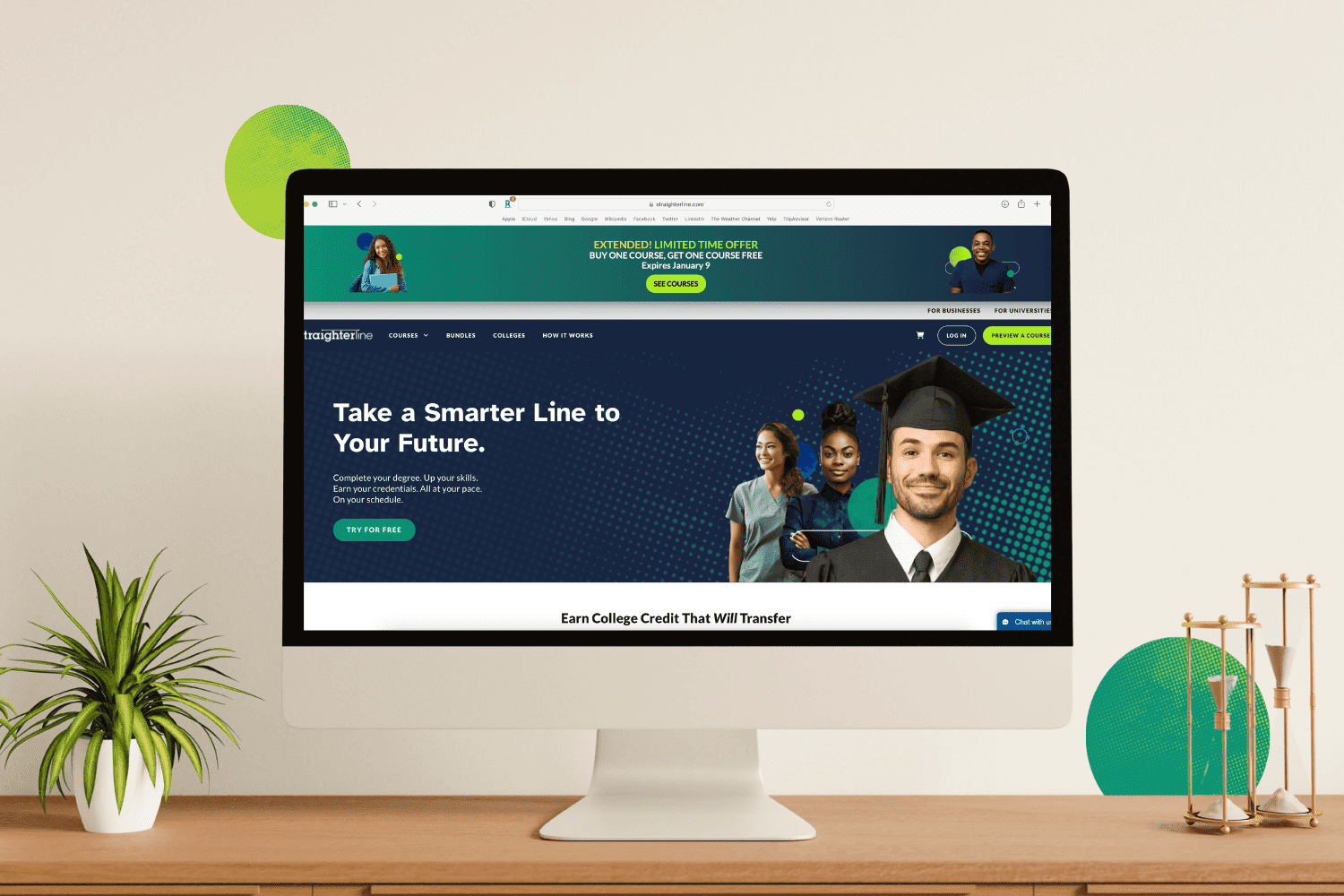



Online college credit providers can be a smart, flexible way to earn credits faster and more affordably — but only if you choose the right one. With so many options available, knowing how to evaluate them objectively can save you time, money, and frustration down the line.
This guide walks through the most important criteria to consider when evaluating online college credit providers, so you can make a confident, informed decision that actually moves you closer to graduation.
TL;DR: What Matters Most When Evaluating Online Credit Providers
Credit transferability is non‑negotiable. If your school won’t accept the credit, it’s not worth taking.
Accreditation matters — but so do partnerships. Regional accreditation plus a strong transfer network is ideal.
Total cost beats sticker price. Look beyond per‑credit cost to include fees, materials, and retakes.
Flexibility should work for your real life. Self‑paced options, flexible start dates, and online assessments matter.
Support and transparency signal quality. Clear syllabi, transfer guidance, and student support are green flags.

Why Does Choosing the Right Online Credit Provider Matter?
Choosing the right provider matters because the wrong one can cost you time, money, and momentum. Credits that don’t transfer, unclear pricing, or inflexible pacing can set you back instead of moving you forward.
At their best, online credit providers help learners:
Knock out general education requirements faster
Save thousands compared to traditional tuition
Stay on track despite work, family, or life changes
At their worst, they create dead ends. That’s why evaluation is key.
Will These Credits Transfer to My College?
Yes, transferability is the single most important factor to evaluate. If your college won’t accept the credit, nothing else matters.
Before enrolling in any course, ask:
Does my institution accept transfer credit from this provider?
Is there written confirmation (transfer guides, equivalency lists, advising emails)?
Are there limits on how many credits I can transfer?
Many providers will say their credits are “widely accepted.” That’s helpful — but vague. What you want is school‑specific confirmation.
Providers that proactively support transfer transparency by publishing transfer guides or maintaining partnerships with colleges remove a lot of guesswork for students.
Is the Provider Accredited (and What Kind of Validation Matters)?
Accreditation is important — but for non-degree providers, credit recommendations matter just as much.
Traditional colleges rely on regional accreditation when deciding whether to accept transfer credit. However, many online credit providers (including StraighterLine) are not degree-granting institutions and therefore cannot be regionally accredited themselves. That doesn’t mean their courses lack credibility — it means they’re validated differently.
This is where ACE Learning Evaluations come in.
The American Council on Education (ACE) is the nationally recognized higher ed organization that evaluates courses and recommends them for college credit based on faculty review, learning outcomes, and academic rigor. ACE credit recommendations are widely used by colleges and universities as a trusted standard when assessing transfer credit from alternative providers.
When evaluating an online credit provider, look for:
ACE-recommended courses with clearly defined credit equivalencies
Transparency about which courses carry ACE credit recommendations
Guidance on how ACE-recommended credit is transferred and applied at partner institutions
All credit-bearing StraighterLine courses are ACE-recommended, which means they’ve undergone third-party academic review and meet established college-level standards. For students, this provides an added layer of confidence that the coursework is rigorous, recognized, and designed to transfer to their degree.
Whether credits are issued directly by a regionally accredited institution or recommended through ACE, the key question remains the same: Will your college accept them? Providers that are clear about how their courses are validated — and how that validation supports transfer — make it easier to answer that question upfront.
How Much Does It Really Cost?
The true cost of online credits includes more than the advertised price per course.
When comparing providers, factor in:
Course or subscription fees
Enrollment or administrative fees
Required textbooks or materials
Proctoring or exam fees
Costs to retake exams or extend time
A provider that looks cheaper upfront can quickly become more expensive once hidden fees stack up.
Transparent pricing — where students know exactly what they’ll pay before enrolling — is a strong indicator of a learner‑first model.
How Flexible Is the Learning Experience?
The best online credit providers are designed for adult learners with busy lives.
Flexibility can show up in several ways:
Self‑paced courses that let you move faster (or slower) as needed
Frequent or rolling start dates
Online exams and assessments
No fixed lecture times
If your goal is speed, flexibility directly impacts how quickly you can earn credit. If your goal is balance, flexibility determines whether you can realistically finish at all.
Some providers, like StraighterLine, are known for fully self‑paced courses — allowing motivated learners to complete classes in weeks rather than months, without sacrificing academic rigor.
What Level of Academic Quality and Rigor Should I Expect?
Online credit should be rigorous enough to transfer — but practical enough to finish.
Quality indicators include:
Clearly defined learning outcomes
Alignment with standard college‑level curricula
Assessments that test mastery, not just completion
Faculty‑reviewed or faculty‑approved course design
A common misconception is that faster or more affordable means “easier.” In reality, well‑designed online courses focus on efficiency — cutting out busywork while still meeting college standards.
What Kind of Support Will I Get?
Strong support systems reduce friction and increase completion.
Look for providers that offer:
Academic support or tutoring options
Transfer guidance and advising resources
Responsive student support teams
Clear documentation and FAQs
Even highly motivated learners benefit from guardrails. Providers that invest in student support signal long‑term credibility and confidence in their programs.
How Do Leading Online Credit Providers Compare?
Here’s a high‑level comparison of what you should be looking for when evaluating options:
Evaluation Criteria | What to Look For | Why It Matters |
Transferability | School-specific transfer confirmation | Prevents wasted time and money |
Credit Validation | ACE credit recommendations or regionally accredited credit source | Signals academic rigor and transfer viability |
Transparency | Clear explanation of how credit is evaluated and transferred | Reduces confusion with registrars and advisors |
Pricing | Transparent, all-in costs | Avoids surprise fees |
Flexibility | Self-paced, online, frequent starts | Supports faster completion |
Academic Quality | College-level outcomes reviewed by third parties (e.g., ACE) | Ensures credits meet college standards |
Support | Transfer guidance and responsive student services | Improves completion rates |
Providers that consistently perform well across these categories tend to be the safest — and smartest — choices.
Is StraighterLine a Good Example of What to Look For?
StraighterLine is often used as a benchmark because it checks many of the boxes students should be evaluating.
Without being the right fit for every learner, StraighterLine illustrates several best‑practice traits:
ACE-recommended, credit-bearing courses that meet established college-level standards
A large network of colleges that accept StraighterLine credits
Fully self‑paced, online courses designed for speed and flexibility
Clear, upfront pricing with no hidden fees
For students trying to complete general education requirements efficiently, these are exactly the kinds of characteristics worth prioritizing, regardless of which provider you ultimately choose.
How Should I Decide Which Provider Is Right for Me?
The best provider is the one that aligns with your school, your timeline, and your budget.
Before enrolling, create a short checklist:
Confirm transferability with your college
Verify accreditation or credit recommendation source
Calculate total cost, not just advertised price
Assess flexibility against your schedule
Review support and student resources
Doing this upfront takes a bit more time, but it dramatically lowers the risk of setbacks later.
Ready to Move Forward with Confidence?
If you’re evaluating online college credit providers because you want a faster, more affordable path to your degree, StraighterLine is a strong place to start. Its transparent pricing, flexible self‑paced courses, and broad transfer network reflect many of the qualities students should be looking for when choosing any provider.
You don’t have to rush the decision. But when you’re ready to earn credits with confidence, StraighterLine makes it easier to take that next step without overcomplicating the journey.
Check out our courses to get started.
FAQs
Do online college credits really transfer to most schools?
Online college credits can transfer, but acceptance depends on your institution. Always confirm transferability with your school and look for providers that offer ACE-recommended courses or clear transfer guidance.
What is ACE credit, and why does it matter for transfer?
ACE credit refers to courses evaluated by the American Council on Education and recommended for college credit. Many colleges use ACE recommendations to assess transfer credit from non-degree providers.
How much do online college credits actually cost?
The true cost includes more than the course price. Be sure to factor in fees, materials, exams, and retakes to compare providers accurately and avoid surprises.
What should I look for in a flexible online credit provider?
Look for self-paced courses, online assessments, frequent start dates, and responsive student support. Flexibility helps busy learners finish faster and stay on track.