





If you’re looking to save time and money while earning college credit, you’re not alone. Many students face the same challenge: how to complete general education or elective credits efficiently without overloading their schedule or overspending on college. That’s where alternative credit options like StraighterLine and CLEP come in.
Both paths can help you earn college credit faster than the traditional route, but they work very differently. StraighterLine offers online, self-paced courses with instruction and support, while CLEP exams allow you to “test out” of certain subjects if you already know the material.
By the end of this post, you’ll understand how each option works, the major pros and cons of each, and a framework for deciding which path is right for you. If you’ve ever wondered whether to study and test with CLEP or take a StraighterLine course, you’re in the right place.

What's the Difference Between CLEP & StraighterLine?
What is CLEP?
CLEP, or the College-Level Examination Program, is a set of standardized exams administered by the College Board. These exams allow students to earn college credit by demonstrating knowledge in over 30 subjects, from College Algebra and Spanish to History and Psychology.
Here’s how CLEP works: you select the exam you want to take, register at a test center (or sometimes via remote proctoring), prepare on your own, and sit for the test. Once you achieve the required score, you can send your results to your college or university for credit.
One key thing to note: CLEP exams don’t provide instruction. You need to come prepared, either from prior coursework or through self-study materials. This makes it a great option for students who are confident in their knowledge and can handle independent learning.
What is StraighterLine?
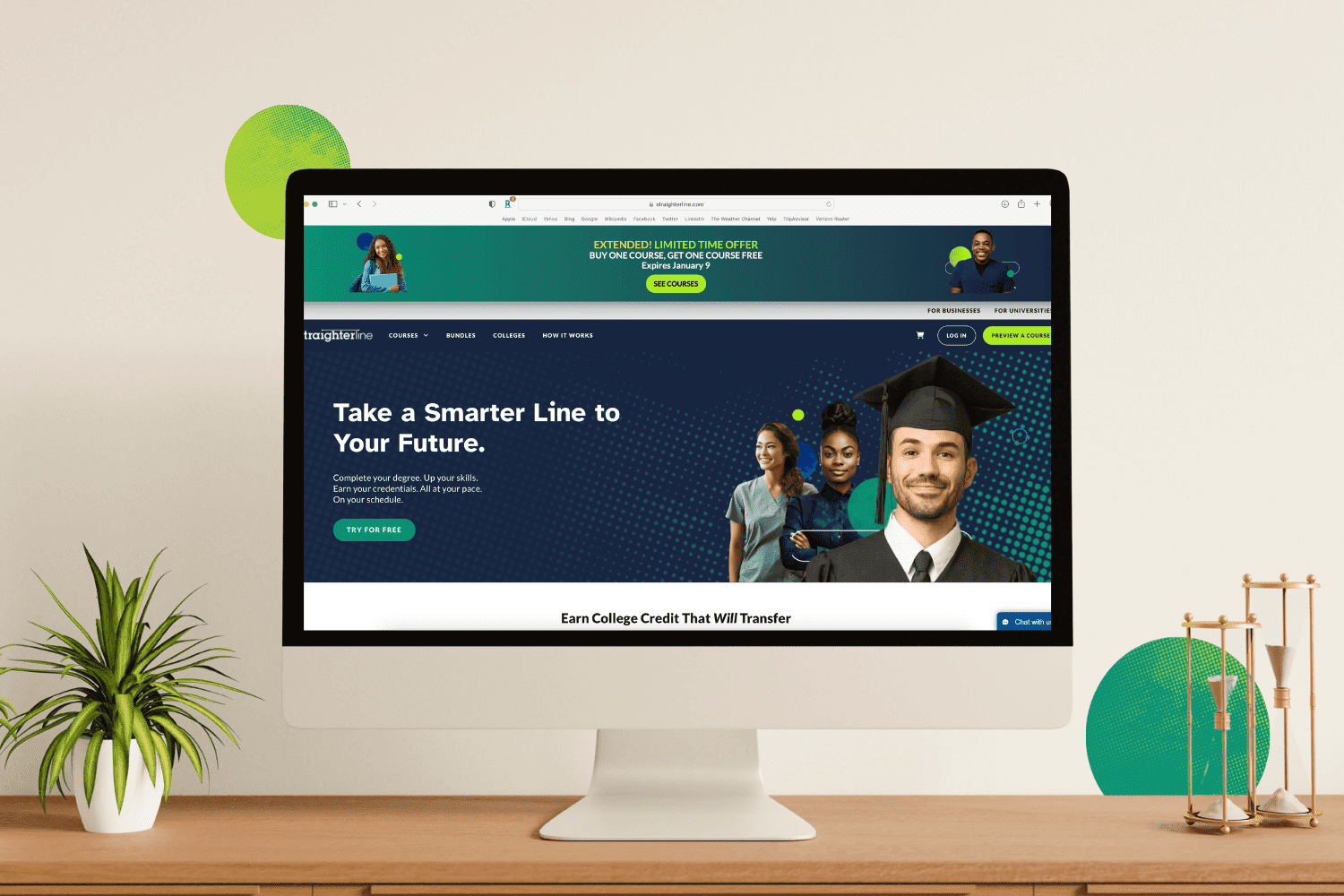
StraighterLine, on the other hand, offers online, self-paced college-level courses that come with instruction, quizzes, digital textbooks, and full support services. Each course awards transferable college credit upon completion, either directly through partner schools or via ACE-recommended credit evaluations.
Here’s how StraighterLine works: you enroll, complete your coursework and quizzes, take a final exam, and then transfer your earned credits to your school. The platform is designed to be flexible—you can progress at your own pace and complete courses in as little as a few weeks if you’re motivated. Unlike CLEP, you don’t have to already know the material; StraighterLine teaches it to you.
Explore all StraighterLine courses here.
How to Compare CLEP & StraighterLine
To decide whether CLEP or StraighterLine is right for you, it helps to compare across five main factors: time, cost, credit transfer, learning support, and flexibility.
| CLEP | StraighterLine | |
| Time & Pace | If you already know the material, CLEP can be extremely fast. You could study for a week or two and take the exam, instantly earning credit. That said, if the subject is unfamiliar, you’ll need to invest time in self-study, which can take more time out of your schedule. | StraighterLine courses are structured but self-paced. You have more guidance, and while the coursework requires more time than a single exam, motivated students can complete a course in just a few weeks. This makes it ideal if you prefer consistent learning, need instruction, or want to ensure you truly understand the material. |
| Cost & Financial Considerations | Exams typically cost around $90, plus any study materials you choose to purchase. If you already know the content, CLEP can be very cost-effective. | StraighterLine Membership + your per course fee may cost more than CLEP exam alone. However, this fee includes instruction, tutoring, and digital textbooks, giving you a full learning experience. If you need multiple courses, membership models may provide additional savings. Paying for instruction may save you money in the long run by preventing exam retakes. |
| Credit Transfer & Acceptance | CLEP credit is widely accepted; thousands of colleges recognize these exams. That said, policies vary, and some schools may limit the number of CLEP credits you can apply toward your degree. | Many partner schools accept StraighterLine courses, and credits recommended by ACE are transferable to many institutions. Still, transfer approval isn’t guaranteed. The safest approach is to check with your target school’s registrar or advising office before enrolling. |
| Support & Learning Experience | You’re mostly on your own. The exam format is fixed (mostly multiple-choice, with occasional essays), and you must be ready to perform without guidance. | Courses are designed for students who want instruction, guidance, and a structured learning path. You’ll have access to digital textbooks, tutorials, and support services, making it easier to stay on track and absorb the material. |
| Risk & Flexibility | One exam determines whether you get the credit. Failing could require waiting before retesting or investing more time in preparation. Scheduling is also less flexible, as you must reserve a test center slot or coordinate remote proctoring. | With multiple quizzes, tests, and a final exam, StraighterLine offers more opportunities to demonstrate mastery. You can progress at your own pace, making it easier to balance coursework with other responsibilities. |
Considering the Pros & Cons of CLEP vs StraighterLine
Why choose CLEP?
Fast route if you already know the material.
Lower cost in some cases.
Accepted by many institutions.
Why you might not choose CLEP
No formal instruction included.
Risky if you aren’t well-prepared.
Transfer acceptance varies — always confirm.
One-shot exams can be stressful.
Why choose StraighterLine?
Structured courses with instruction and support.
Guided learning ideal for those who need teaching.
More reliable for mastering material before earning credit.
Why you might not choose StraighterLine
While most courses can be completed in less than 30 days, it does require more time than just testing out.
Cost may be higher if you've already learned the material and don't need to retake your CLEP exam.
Credit acceptance varies; always confirm.
Which One is Right for You?
Still can't choose between CLEP and StraighterLine? Here’s a framework to help you decide:
Already know the subject? CLEP might make sense.
Want guided instruction or need to review material? StraighterLine is likely a better fit.
Check credit transfer policies first. Minimum CLEP scores and StraighterLine course acceptance vary by school.
Consider timeline and schedule. Need to move fast? Working multiple jobs? StraighterLine’s flexibility may be helpful, but CLEP could save time if you’re ready.
Consider cost vs time. Some students mix and match: CLEP for subjects they know, StraighterLine for subjects where instruction helps.
CLEP vs StraighterLine — What's the Better Fit for You?
Your best path depends on your knowledge, learning style, timeline, budget, and your school’s policies. StraighterLine is a great fit for students who want instruction, support, and a guided path while CLEP is great for confident learners who want a quick, cost-effective way to earn credit.
Do your homework: check with your school’s registrar or advising office, map out which credits you need, estimate your time and costs, and then decide.
If you have any questions, don’t hesitate to reach out to a StraighterLine enrollment counselor if you want personalized guidance.
And if you found this helpful, share it with your friends or fellow students who are looking to maximize their college credits. Your future self — and your wallet — will thank you!
FAQs
What's easier — StraighterLine or CLEP?
“Easier” really depends on how you learn. StraighterLine may be easier for students who want instruction, practice, and feedback along the way. Instead of one high-stakes exam, you complete quizzes, assignments, and a final, which can feel more manageable.
Do colleges accept StraighterLine and CLEP credits the same way?
Not always. Many colleges accept both, but acceptance policies vary by college, degree program, and even department. Some schools may accept certain CLEP exams but not others, or accept StraighterLine courses only through specific partnerships or ACE recommendations. Always confirm with your school before enrolling or testing or simply check if your school is a StraighterLine partner.
Which option is better if I’m working full-time?
StraighterLine is often a better fit for busy students because you can log in anytime and progress at your own pace. CLEP requires you to prepare independently and schedule a proctored exam, which can be less flexible. If you need structure without rigid deadlines, StraighterLine tends to work well.
Can I use both StraighterLine and CLEP toward my degree?
Yes—many students use both. You might CLEP out of subjects you already know and use StraighterLine for courses where you want instruction or extra support.