





Are you wondering whether you can earn college credit online without attending live lectures? The short answer is yes! Plenty of accredited institutions offer asynchronous or self-paced online courses that allow students to complete coursework on their own schedule without required live sessions.
Flexibility has become increasingly important for students, and that's especially true for those balancing work, parenting, military service, or other responsibilities that make fixed schedules difficult. Over the past decade, online education has evolved into an affordable, high-quality, and even common path to a degree. Many colleges now offer accredited courses that don’t require real-time participation so students can simply work through the material on their own timeline.

In this guide, we’ll explain how asynchronous online courses work, whether they’re legitimate, how transfer credit typically works, and how you can start earning college credit without attending live lectures.
Do Online College Courses Require Live Lectures?
While some online courses require students to attend live sessions, plenty of others do not.
In general, online college courses fall into two main categories: synchronous and asynchronous. Understanding the difference between them can help you choose a format that fits your schedule and learning style.
| Feature | Synchronous | Asynchronous |
|---|---|---|
| Live attendance | Required | Not required |
| Schedule flexibility | Limited | High |
| Deadlines | Fixed weekly meetings | Often flexible |
| Best for... | Structured learners | Independent learners |
Synchronous courses function similarly to traditional classrooms. Students attend live lectures via Zoom or another platform at scheduled times.
Asynchronous courses, on the other hand, remove the live attendance requirement entirely. Students access course materials, complete assignments, and participate in discussions on their own time within a set timeframe.
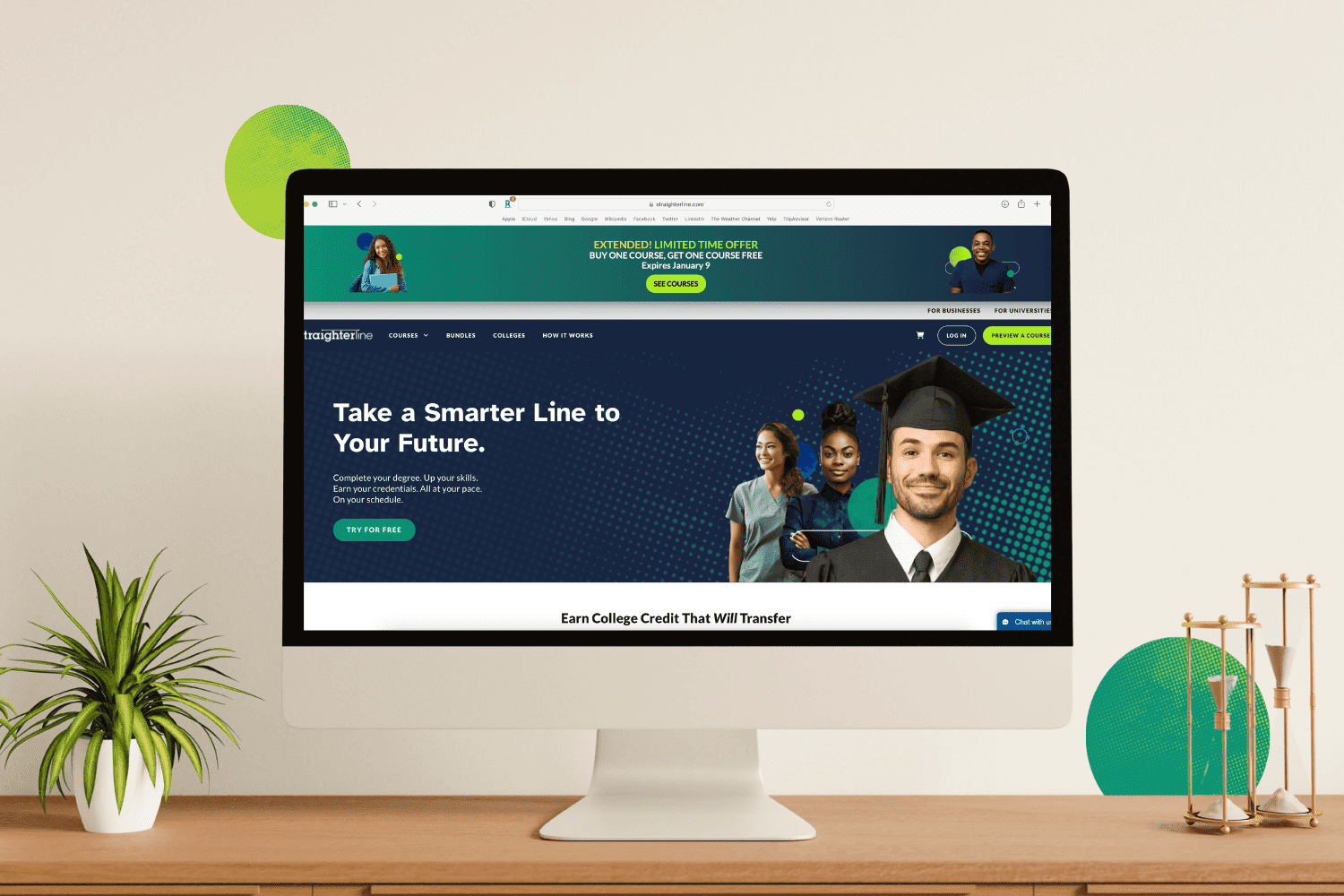
For students who need flexibility, asynchronous learning is often the most practical option. Platforms like StraighterLine offer online college courses that can be completed entirely asynchronously — without any live lectures or a fixed schedule.
What Are Asynchronous or Self-Paced Online Courses?
Asynchronous courses are online classes that, as described above, do not require live participation. Instead of attending scheduled lectures, students access course materials whenever it works best for them.
These courses typically rely on a combination of recorded content, readings, and written instruction. In many cases, students can move through the material at their own pace as long as they meet course deadlines.
A typical asynchronous course might include:
Pre-recorded lectures or video modules
Digital textbooks or reading assignments
Online quizzes and exams
Discussion boards or written assignments
Coursework generally follows a simple rhythm:
Watch or read the assigned material
Complete and submit assignments
Take quizzes or exams
Receive instructor feedback
Even without live lectures, students still have access to instructors. Communication usually happens through email, discussion forums, or scheduled virtual office hours.
This format allows students to maintain academic progress without having to rearrange their entire weekly schedule around class times.
Are Online Courses Without Live Lectures Legitimate?
Wondering whether online courses without live lectures are legitimate? They absolutely can be!
The key factor is accreditation. When a course is offered by an accredited institution or through an accredited provider, it must meet recognized academic standards. That means the coursework, assessments, and learning outcomes are designed to be equivalent to traditional classroom instruction. Accreditation ensures that the coursework meets recognized academic standards and is eligible for transfer at participating colleges and universities. Some online course providers, including StraighterLine, work directly with accredited colleges and maintain transfer partnerships to help students apply their coursework toward a degree program.
In practice, asynchronous courses still include structured learning components such as assignments, exams, and instructor oversight. Many universities use the same curriculum for their online and in-person courses, simply delivering the material in a different format.
For students, the takeaway is simple: the absence of live lectures doesn’t make a course less credible. What matters most is whether the institution or provider meets established academic standards.
Can You Transfer College Credit Earned Online?
In many cases, yes — college credit earned online can transfer, so long as the course meets certain criteria. The most important factors are accreditation and the policies of the receiving institution. Colleges ultimately decide which credits they accept, so transfer policies can vary.
Here are a few key things to consider:
Check transfer policies early.
If you plan to transfer credits to another college, it’s helpful to review their transfer guidelines before enrolling in courses.
Understand ACE recommendations.
Some online courses carry recommendations from the American Council on Education (ACE), which many colleges recognize when evaluating transfer credit.
Look for articulation agreements.
Some course providers have established partnerships with colleges that make transferring credits more straightforward.
StraighterLine has a network of 180+ partner colleges and more than 3,000 colleges which have accepted our credits. Choosing a partner school can further simplify the process for students planning to apply credits toward a degree.
In general, general education courses like English composition, college algebra, or introductory psychology transfer more easily than highly specialized major courses.
If transferring credit is part of your plan, start by consulting your academic advisor to prevent surprises later.
Who Benefits Most from Online College Credit Without Live Lectures?
Asynchronous college courses are especially helpful for students who need control over their schedules. While anyone who's capable of independent learning can be successful, the students who tend to benefit most from this format are:
Working adults
People with full-time jobs often find it difficult to attend scheduled lectures. Self-paced courses allow them to study during evenings or weekends.
Parents and caregivers
Flexible coursework can be completed around childcare responsibilities or unpredictable daily routines.
Military members and veterans
Service members frequently face changing schedules or deployments, making asynchronous learning a practical option.
Students balancing multiple commitments
Whether juggling internships, part-time work, or other classes, asynchronous courses offer more flexible scheduling for when everything doesn't go as planned.
Independent learners
Some students simply prefer learning at their own pace without the structure of weekly lectures.
Students who want to accelerate their degree
Self-paced formats sometimes allow motivated learners to complete courses faster than traditional semester timelines.
In many cases, the biggest advantage is control — students decide when and how they engage with the material.
How Much Flexibility Do Self-Paced Courses Offer?
Not all asynchronous courses work exactly the same way. The level of flexibility can vary depending on the program. The most common formats include:
Fully self-paced online courses
Students can start anytime and progress as quickly as they’re able to complete the material. This is how platforms like StraighterLine work.
Term-based asynchronous courses
Courses follow a traditional academic term but do not require live lectures.
Deadline-based asynchronous courses
Students work independently but must complete assignments by specific weekly deadlines.
Completion timelines can vary as well. Some online courses can be completed in:
4–8 weeks
8–12 weeks
Shorter timeframes with acceleration options
Because students control their pace, those who are highly motivated may finish faster than they would in a traditional semester. At the same time, the flexibility also allows students to slow down when life gets busy.
Are There Any Downsides to Taking Online Courses Without Live Lectures?
While asynchronous learning offers flexibility, it isn’t the right fit for everyone.
One of the biggest challenges is self-discipline. Without scheduled lectures, students must take responsibility for staying on track with readings and assignments.
There may also be less real-time interaction with instructors and classmates compared to live courses. Some students thrive in discussion-heavy environments and may miss that immediate engagement.
Finally, time management becomes more important. When deadlines are flexible, it’s easy to procrastinate if you’re not careful.
Fortunately, a few simple strategies can make asynchronous learning much easier to manage:
Set weekly study goals
Block time on your calendar for coursework
Communicate regularly with instructors
Treat your online class like a scheduled commitment
With the right structure, many students find asynchronous learning both manageable and empowering.
What Types of College Credits Can You Earn Online Without Live Lectures?
A wide range of college courses are now available in asynchronous formats. Many of them focus on general education or foundational subjects, which are required in most degree programs.
Common examples include:
General education courses
Prerequisite science courses
Business fundamentals
Social sciences
Electives
Because these courses are widely required across degree programs, they’re often designed with flexible online delivery in mind.
How to Get Started Earning College Credit Online (No Live Lectures Required)
If you’re interested in earning college credit without attending live lectures, the first step is identifying programs that offer asynchronous or self-paced courses.
A good starting point is researching providers that partner with accredited colleges and universities to offer transferable credit options.
When comparing programs, it helps to look at a few key factors:
Choosing accredited providers
Always verify that courses are offered through accredited institutions or recognized academic partnerships. Accreditation ensures the coursework meets established academic standards.
Confirming transfer policies
If you plan to transfer credits toward a degree, check how the receiving college evaluates outside coursework. Some providers also publish transfer networks or partner school lists.
Reviewing course formats
Not all online courses are fully self-paced. Some may still include weekly deadlines or discussion participation. Make sure the format aligns with the level of flexibility you want.
Comparing cost per credit
Online programs can vary widely in pricing. Looking at the cost per credit rather than just total course price can make comparisons easier.
Evaluating pacing options
Some courses allow students to move quickly through material, while others follow a set timeline. Choosing the right pacing structure can make a big difference depending on your schedule.
Final Thoughts
Ultimately, earning college credit online without live lectures is not only possible — it has become a common pathway for many students. With the right course format and a clear plan for transferring credit, asynchronous learning can provide a flexible and effective way to make progress toward a degree.
If you’re interested in earning college credit on your own schedule, StraighterLine offers a range of affordable online college courses designed to help you complete general education and prerequisite requirements without attending live lectures.
Explore StraighterLine’s available courses and see which prerequisites may fit your academic goals.
FAQs
Can I really earn college credit without attending live lectures?
Yes! Many accredited institutions and providers like StraighterLine offer asynchronous courses that count for college credit. As long as the course is accredited, the credit is legitimate and can often transfer to participating colleges.
How do asynchronous courses differ from regular online classes?
Asynchronous courses let you access lectures, readings, and assignments on your own schedule instead of attending live sessions. You still complete quizzes, exams, and projects, and can communicate with instructors via email or discussion boards.
Will my credits transfer to another college?
Often, yes — but it depends on the receiving institution’s policies. Credits from accredited providers or courses recommended by the American Council on Education (ACE), such as those from StraighterLine, usually transfer more easily.
Who is best suited for self-paced online courses?
Students with busy or unpredictable schedules benefit most, including working adults, parents, military members, and independent learners. Motivated students who want to accelerate their degree can also thrive in a self-paced format.