TL;DR
Online education benefits adult learners by offering flexible schedules, lower total costs, remote access to coursework, and programs that align directly with career goals. For working adults, parents, and caregivers, online learning makes it possible to earn college credit or advance skills without stepping away from work or family responsibilities.
It’s 9:17 p.m. The kids are finally asleep. There’s a half-finished cup of coffee on the counter. A working parent opens a laptop — not because they have extra time, but because it’s the only time they have.
Going back to school isn’t a question of interest or ambition. It’s a question of logistics. How do you fit college into a life already filled with work, childcare, bills, and unpredictable schedules? How do you afford it without taking on unsustainable debt? And how do you make progress without uprooting your family or quitting your job?
This is the reality facing millions of adult learners today. They’re not choosing between college and free time; they’re choosing between educational options that fit their lives and those that don’t.
That’s where online education enters the picture.
Online learning is often described with familiar buzzwords: flexibility, access, affordability, convenience. And those benefits are real. Online programs reduce or eliminate commuting, housing, and relocation costs, expand access to programs beyond geographic boundaries, and allow students to learn on schedules that align with work and family responsibilities. As one overview notes:
“Not only are these programs more accessible than ever, but they also offer a number of benefits for adult learners.” — Post University
What’s often overlooked is why these benefits matter so much right now. Adult learners are returning to school at a moment when time is scarce, financial stakes are high, and the labor market is changing quickly. Education isn’t just about enrichment. It’s about stability, mobility, and long-term security.
So this isn’t an abstract “online versus on-campus” debate. It’s about whether higher education actually works for people juggling jobs, families, and financial obligations, and not just full-time students with flexible schedules and campus support systems.
In this guide, we’ll break down:
How adult learners’ realities differ from traditional college students
How the benefits of online education align with those constraints, and where they fall short
Why flexibility is an equity issue, not a perk
What quality and belonging look like in effective online programs
Where online education can fail adult learners
What institutions must change to serve the majority of today’s students

What Makes Adult Learners’ Needs Different Today?
Adult learners balance work, caregiving, and financial responsibility, making time flexibility, affordability, and career relevance essential — not optional.
Adult learners aren’t just “older freshmen.” They’re 25, 35, 55. They’re parents, caregivers, full-time employees, often all three at once.
In fall 2023, about 3.9 million U.S. undergraduates were over age 25, roughly 24% of all undergrads (BestColleges). That’s not a niche population.
Most adult learners are working. Over 69% are employed full- or part-time, and nearly half have dependent children (BestColleges). “Busy” doesn’t mean extracurriculars and a campus job. It looks more like:
40+ hours of paid work
Childcare and bedtime routines
Aging parents
Tight household budgets
Limited transportation or unreliable childcare
Many adult learners are also first-generation students and come from racially and economically diverse backgrounds. They’re entering systems that weren’t designed for them, and often still aren’t.
Their motivations are different, too. As Mike Krause, senior advisor at the John M. Belk Endowment, notes:
“Adults are coming in chiefly to get a better job and better skills … less about obtaining a credential and more about improving their workforce prospects.”
That combination of high pressure, limited time, and career focus explains why flexible learning formats have become essential, not optional.
How Do the Benefits of Online Education Address Real Constraints?
Online education supports adult learners through flexible scheduling, remote access, broader program options, lower total costs, and immediate workplace relevance.
Flexible Schedules and Asynchronous Learning
Asynchronous courses, those without fixed meeting times, are often the deciding factor for adult learners.
They allow students to log in at 10 p.m., 5 a.m., or during a lunch break. As one analysis explains:
“One of the biggest perks for many adult learners is the simple fact that online classes allow for unrivaled flexibility and versatility.” — Post University
For working parents or caregivers, that flexibility can mean the difference between persisting and dropping out.
Geographic Freedom and Access
For learners in rural areas or regions without relevant programs, remote access isn’t a convenience, it’s the entire opportunity. Being able to study without relocating or disrupting family life fundamentally changes who can participate.
This is also where course-level online options can matter. Some adult learners don’t need, or want, a full degree right away. Completing transferable general education courses online, for example, can help learners make progress on their own timeline before committing to a program.
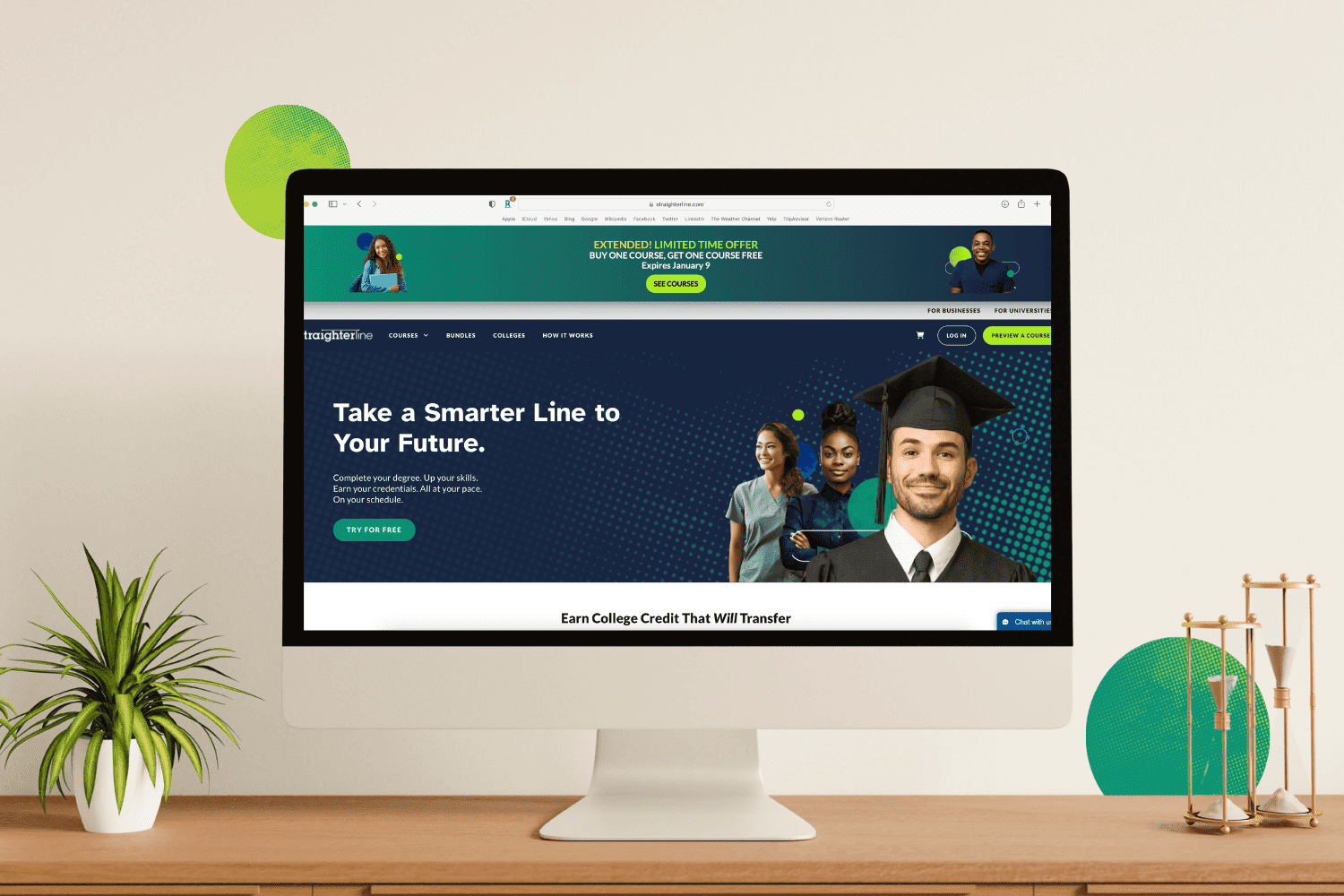
Programs like StraighterLine, for example, focus specifically on self-paced, online college courses that are designed to transfer into degree programs — allowing adult learners to earn credit, reduce time to degree, and keep costs down without stepping away from work or family.
Program Variety and Stackable Pathways
Online education expands access to specialized programs, certificates, and modular credentials:
“Online learning also provides adult learners with access to a much wider range of programs and courses than on-campus learning alone.” — Post University
Stackable learning lets adults align education with job changes, promotions, or skill gaps — instead of putting life on hold for four years.
Lower Total Cost — Not Just Tuition
For adult learners, affordability goes beyond sticker price. Online learning reduces or eliminates:
Commuting and parking costs
Campus housing
Meal plans
Lower “total cost of attendance” can be just as impactful as tuition savings.
Immediate Workplace Application
Many adult learners can apply what they’re learning at work almost immediately:
“Online courses could be an excellent option for those already working in their chosen fields but want to advance their education.” — Post University
That learn-today, apply-tomorrow loop is often what keeps adults engaged when motivation is stretched thin.
Why Are These Online Education Benefits About More Than Convenience?
Flexibility in online education is fundamentally about equity, access, and survival — not comfort.
Time and location are gatekeepers. When nearly half of adult learners have dependent children and most are employed, rigid schedules quietly exclude large segments of the population.
Flexibility is especially critical for:
Single parents
Shift workers
Rural learners
Students with disabilities
First-generation students
Online learning can help remove structural barriers by overcoming geographic and physical limitations (AIU).
It also builds digital fluency — skills that employers increasingly assume workers already have. Learning online requires comfort with platforms, collaboration tools, and remote communication, which are all directly transferable to modern workplaces.
From a motivation standpoint, autonomy matters. Research consistently highlights autonomy, competence, and relatedness as key drivers of adult learning engagement (PMC).
Adults don’t need micromanagement. They need control over when, how, and why they learn.
What Do Online Programs Reveal About Quality and Belonging?
Online education quality is generally strong, but many adult learners struggle with isolation and lack of belonging.
Survey data shows online students often rate academic quality positively (Inside Higher Ed). The real challenge isn’t content; It’s connection.
Online learners frequently report feeling less socially connected than their on-campus peers. As Omid Fotuhi, director of learning innovation at WGU Labs and a research associate at the University of Pittsburgh who studies online learners, explains:
“Belonging online isn’t a watered-down version of the campus quad. It’s a different ecology altogether.”
When belonging does happen online, it’s usually because of:
Small cohorts or peer groups
Consistent, human instructor feedback
Examples and assignments that reflect adult lives
Uploading lecture videos alone isn’t enough. When institutions treat online learners as an afterthought, students feel it.
What Can Undermine the Benefits of Online Education?
Online education can fail adult learners when self-regulation demands are unrealistic, digital access is uneven, or programs lack transparency and credibility.
Key challenges include:
Self-discipline and distraction: Freedom requires strong course design and support.
Digital access gaps: Reliable internet and devices aren’t universal.
Low-quality or predatory programs: Red flags include vague outcomes, aggressive marketing, unclear accreditation, and weak student support.
This is why transparency around cost, credit transfer, and outcomes is especially critical for adult learners. Models that clearly show how individual courses apply toward a degree — rather than locking students into long, expensive commitments upfront — can significantly reduce both financial and academic risk.
That emphasis on clarity and transferability is part of why some adult learners start with standalone course providers like StraighterLine before enrolling in a full degree program.
What Should Institutions Do to Support Adult Learners Online?
Institutions must design adult-first systems that integrate flexibility, engagement, career relevance, and real support.
That means:
Asynchronous-first course design
Modular, stackable credentials
Embedded time-management and learning support
Integrated career, wellness, and academic services
It also means recognizing prior learning and experience. Adult learners bring skills, not blank slates.
Some organizations already support this model by focusing on flexible, transferable coursework that fits into larger degree pathways, allowing learners to move forward without committing to a one-size-fits-all timeline.
The Road Ahead: Rethinking Success for Adult Online Learners
It’s time to retire the term “nontraditional student.”
When a quarter of undergraduates are over 25 — and many more are enrolled in certificates and workforce programs — adult learners aren’t the exception. They’re the core use case.
When done right, online education offers:
Flexibility rooted in equity
Broader access across geography and life constraints
Lower total cost
Built-in digital skill development
Immediate career relevance
The challenges don’t disappear. But they become manageable when institutions stop designing for an outdated, campus-centric ideal.
The real question isn’t whether online education “counts.”
It’s whether we’re willing to design education for the lives people are actually living.
Ready to Take the Next Step?
If you’re an adult learner exploring flexible ways to move forward, starting with affordable, transferable online courses can make the process feel more manageable.
StraighterLine offers self-paced, online college courses designed to fit around work, family, and real-world responsibilities — helping students earn credit on their terms and keep momentum toward a degree.
Browse our courses to see what fits your goals, your schedule, and your next step forward.
FAQs
What are the main benefits of online education for adult learners?
Online education offers adult learners flexible scheduling, lower total costs, remote access to coursework, and programs that align with career goals and life responsibilities.
Is online education a good option for working adults and parents?
Yes. Online education is often designed for working adults and parents, allowing them to complete coursework outside standard class times without commuting or relocating.
How does online education help reduce the cost of college for adults?
Online education can reduce the total cost of college by eliminating commuting, housing, and relocation expenses, and by allowing learners to complete courses at their own pace.
Are online college courses as high-quality as on-campus courses?
Many adult learners report positive academic experiences in online programs. The biggest challenge isn’t content quality, but building connection and belonging in online environments.
What should adult learners look for in an online education program?
Adult learners should look for accredited programs with flexible schedules, transparent costs, clear credit transfer policies, and strong academic and student support.